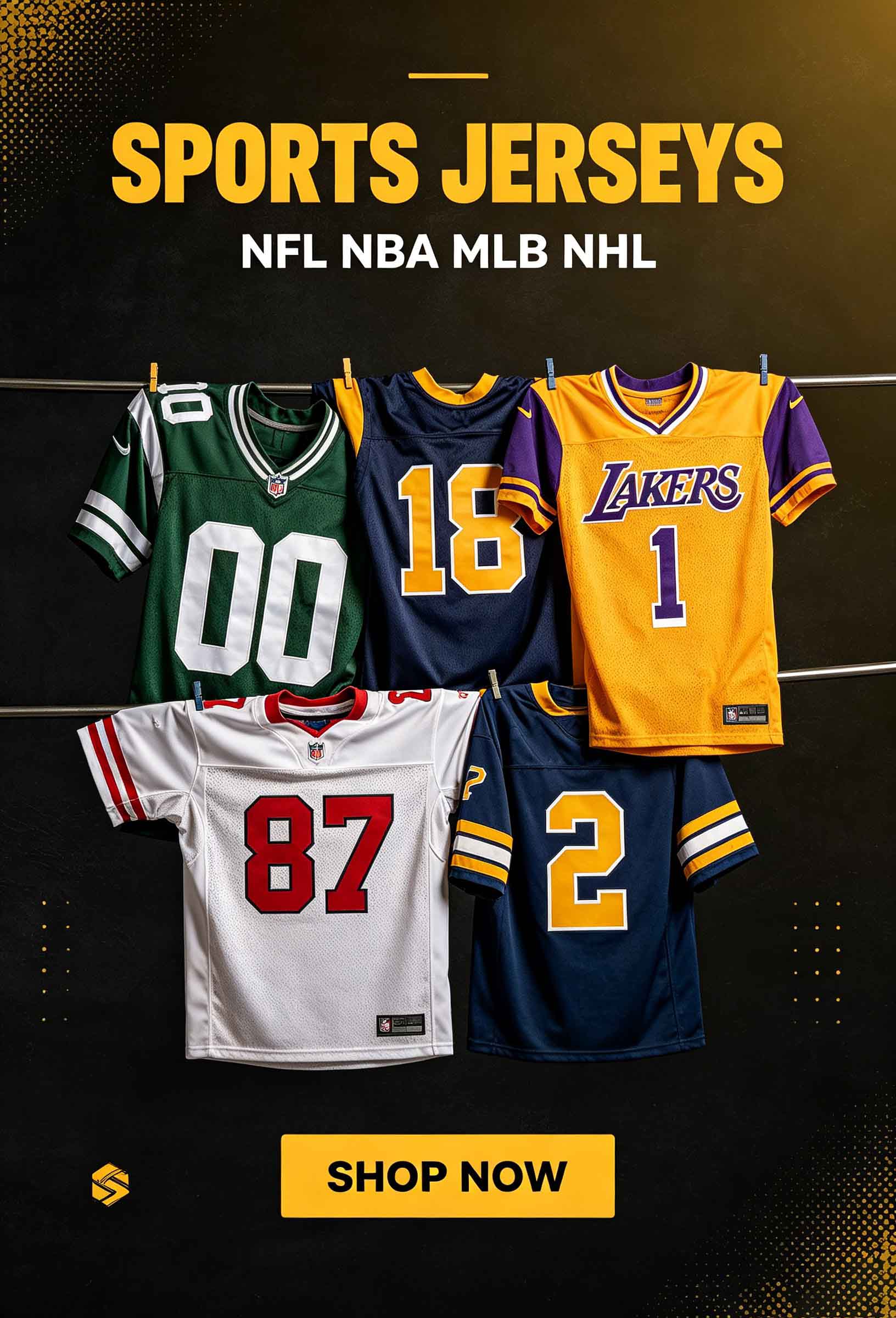
I still remember digging through a thrift rack outside Sacramento and pulling out a faded red 49ers jersey with a number I didn't even recognize. The fabric was heavy, the sleeve stripes were slightly crooked, and I bought it anyway. That find is what started my thing for a San Francisco 49ers throwback jersey — the older cuts just feel like they belong to a meaner era of football.
Most of what people call a throwback in 49ers terms comes from one of two wells. There's the '80s dynasty look, red or white with the SF helmet logo everyone pictures when they hear Joe Montana's name. Then there's the 1994 75th-anniversary set, which the team wore on the way to winning Super Bowl XXIX. That '94 white jersey with the drop-shadow numbers is the one I get asked about most, probably because Steve Young was throwing out of it.
Here's where people get tripped up. A modern Nike Game jersey is screen-printed — the numbers are basically heat-pressed ink on mesh. Limited gets you stitched numbers and a sewn-on nameplate. Elite is the closest thing to what's actually worn on the field, with a stretchier, more fitted build. Throwback specialists like Mitchell & Ness sit in their own lane: heavier fabric, boxier cut, and that slightly shiny polyester that screams early '90s.
Sizing is the part I'd never wing. Mitchell & Ness uses old-school even numbers — 40, 44, 48, 52 — and they run big and long. My usual adult large is a 44 there, and it still hangs past my hips, which I didn't expect the first time I ordered. Nike jerseys are lettered instead and fit closer to a normal shirt, though the Game cut stays loose through the body.
So when a friend asks me how to pick, I usually tell them this:
- Mitchell & Ness: size down one step if you're not layering
- Nike Game or Limited: stay true to your t-shirt size for a relaxed fit
- Wearing it over a hoodie: go up a full size, no exceptions
- Women's cuts run narrow in the shoulders — trust the chest measurement, not the tag
Weight matters too, and nobody mentions it. A throwback is noticeably heavier than a current jersey, which is great in October and rough in September. I wore my '94 white one to a warm-weather game and spent three hours regretting it. If you run hot, modern mesh is the smarter call.
Then there's the number on the back, which is half the decision. Rice's 80, Montana's 16, Young's 8, Ronnie Lott's 42 — those are timeless and never look dated five years later. Going with a current player is a bigger bet, since rosters turn over fast. A custom nameplate is fun, but understand it hurts resale if you ever want to move on from it.
Styling-wise, I keep it simple. Red jersey, dark jeans, white sneakers. Gold and red are already loud together, so piling on more color turns into a costume fast. With a white throwback, a plain gray or black layer underneath reads better than a red one.
Care is where throwbacks die young. Heat is the enemy — dryer heat cracks screen print and shrinks mesh, and a hot iron touching the numbers melts them into a sad plastic smear.
- Turn it inside out, cold water, gentle cycle
- Skip the dryer completely and hang it flat to dry
- Never iron the numbers or nameplate directly
- Wash it alone the first few times; red dye bleeds
That's basically why a San Francisco 49ers throwback jersey still beats everything new in the team store. It isn't nostalgia for its own sake. The old cuts photograph better, they hold up longer, and they let you rep a specific moment instead of whatever the current uniform rotation happens to be.
If you're buying one as a gift, stick with a retired legend and ask about their size in a normal t-shirt first. Guessing wrong on a throwback is an expensive mistake, and nobody wants to explain to their dad why the 44 they asked for arrived looking like a dress.