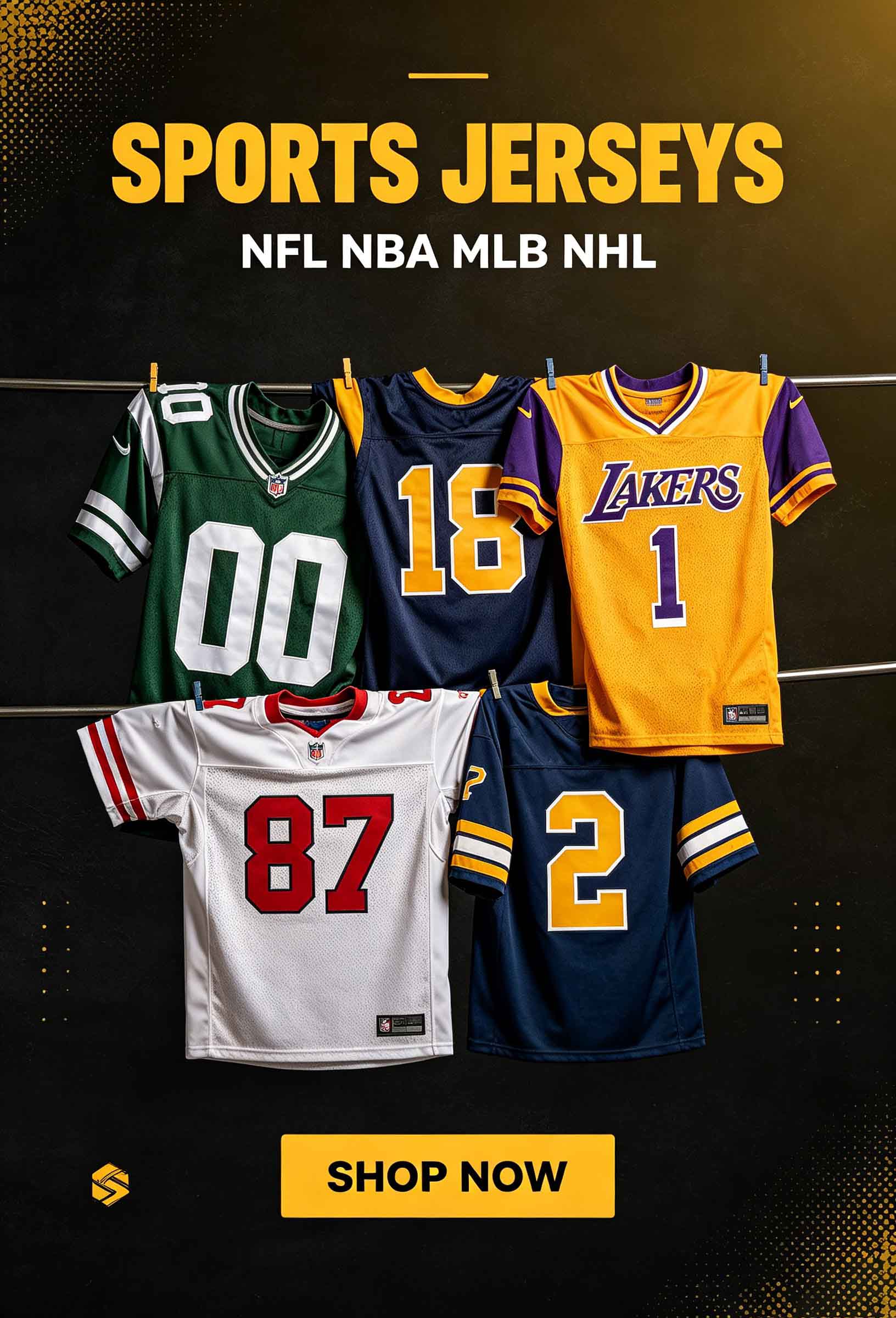
How much do nba jerseys cost wholesale is the first number that decides your margin on a team order or resale run. Most buyers get stuck between inflated distributor quotes, thin replica stock that pills after two washes, and ocean freight that lands after the season has cooled. This guide breaks down real bulk pricing tiers, the build details that protect your retail price, and the US warehouse math that keeps your cash moving.
Wholesale NBA jersey cost is not one number. It moves with fabric weight, decoration, quantity, and whether the stock ships from a US warehouse or a factory floor. For planning, most US bulk programs settle into these bands:
- Printed replica, 150–180 GSM: $7–$12 per jersey at 100+ pieces.
- Stitched fan or retro build, 220–260 GSM: $14–$22 per jersey.
- Heavyweight 300 GSM mesh with double-stitched tackle twill: $19–$30 per jersey.
- Authentic-style build with layered twill and pro trim: $28–$42 per jersey.
- Custom names and numbers: add $2–$5 per jersey at 50+ pieces.
Those numbers are sanity checks, not final quotes. If a price sits far below the band, inspect the mesh weight, stitch count, and interior finish before you wire a deposit. A $9 jersey that shrinks or cracks after one wash is not cheap; it is a return waiting to happen.
The first place low quotes hide cost is fabric. A 150 GSM jersey feels light in the hand and looks flat on a hanger. A 300 GSM heavyweight mesh holds its shape, drapes better on the body, and survives repeated wash cycles without turning into a rag. For resale, the heavier fabric supports a higher retail price and fewer complaints.
Ask for 100% breathable polyester mesh, not a poly-cotton blend that traps heat. Mesh holes should be uniform, the surface should not snag on a fingernail, and the color should be dyed through the yarn rather than painted on top. Check the inside of the jersey under natural light; poor dye lots show streaks at the side seams.
Decoration is the second cost driver. Heat-pressed vinyl is fast and cheap, but it peels at the corners after a few washes. Double-stitched Tackle Twill numbers cost more up front and last far longer. The stitch density should be tight and even, with no loose threads, skipped stitches, or puckering around the curves.
Look for Z-stitch reinforcement at the armholes, side vents, and shoulder seams. That zigzag pattern gives the seam room to stretch without popping. A flat single-stitch seam may look clean on a table, but it fails when a buyer pulls the jersey over their head or wears it through a full game.
The collar tells you a lot about the factory. A reinforced collar band keeps its shape after washing and does not roll up at the front. Run your thumb along the inside of the neckline; a rough, stiff edge will irritate players and fans. Good suppliers finish that area with a soft interior backing so the twill and seams do not scratch the skin.
When you compare quotes on custom breathable mesh NBA jerseys, request a cut sample, not just a photo. Cut through the shoulder seam and inspect the thread. Ask for the stitch count per inch on the twill and the exact fabric weight in GSM. A supplier who cannot answer those two questions is not a factory-direct source.
US warehouse stock changes the math. A domestic supplier can ship bulk orders in 1–3 business days, with no customs clearance, no ocean delay, and no surprise duty bill. That speed matters when a league season starts in two weeks or a local team store runs out of the top-selling size before a playoff run.
Do not confuse landed cost with unit price. A $17 jersey from a US warehouse may cost less overall than a $12 factory quote that carries 45–60 days of transit, customs brokerage, and a 6% defect rate. Add the cash tied up in transit and the markdowns on late stock, and the domestic option often wins on true margin.
Order quantity should follow a size curve, not a flat split. A practical adult run for NBA-style jerseys looks like this:
- S: 10%
- M: 20%
- L: 25%
- XL: 22%
- 2XL: 15%
- 3XL: 8%
Adjust that curve for your buyer. Youth leagues need more S and M, while retro buyers often skew toward L and XL. Keep 8–10% spares for replacements and team additions. A bulk order with no spares turns one damaged jersey into a customer service problem.
Custom names and numbers add cost, but they also add margin. Collect a clean roster file with exact spelling, number, and size. Confirm the font, number style, and placement before production. At 50+ pieces, a well-run supplier can keep the add-on near $2–$5 per jersey and still deliver a stitched look that supports a $60–$80 retail price.
Run a pre-shipment inspection on every bulk order. Use a simple four-point check:
- Measure the chest 1 inch below the armhole; allow ±0.5 inch tolerance.
- Count stitches on twill curves; reject loose or skipped edges.
- Pull the collar and armhole seams; look for gaping or broken thread.
- Wash three samples in cold water; check for cracking, bleeding, and shrinkage.
Retail math is straightforward. If your landed cost is $18 and you sell at $55, gross margin is about 67%. At a $22 cost and $49 retail, margin drops to 55%. On 100 units, a $2 saving per jersey is $200 in extra profit, which is why the fabric and stitch spec matters as much as the quoted unit price.
Care instructions reduce returns. Tell buyers to wash inside out in cold water, skip fabric softener, and hang dry. Do not iron directly on twill or printed numbers. A jersey that is washed correctly keeps its shape, color, and stitch tension far longer, which protects your store rating and repeat orders.
League managers should order two weeks before the first game and keep a small replacement kit. Resellers should test 20–30 units across core teams, retro styles, and youth sizes before committing to a deep buy. Mix best-selling teams with a few statement pieces; do not put all your cash into one roster.
Supplier vetting saves more money than negotiation. Ask for live warehouse video, current stock counts, close-up stitch photos, and a written replacement policy for defects. A supplier with US stock should know its size availability by color and style, not just a vague “plenty in stock” answer.
Payment terms and tier breaks are worth a conversation. Ask for pricing at 50, 100, and 250 pieces, and confirm whether freight is included. Request a sample credit on the first bulk order. Those small terms improve your landed cost without chasing a risky low quote from an unknown factory.
What is the average wholesale cost of an NBA jersey?
For 100+ pieces, printed replicas often land around $7–$12, stitched fan builds around $14–$22, and heavyweight 300 GSM mesh with tackle twill around $19–$30. Custom names and numbers usually add $2–$5 per jersey.
Is there a minimum order for bulk NBA jerseys?
Many US stock programs start at 10–20 pieces per style, while custom names and numbers often begin at 50 pieces. Low MOQ is useful for testing teams and sizes before a larger seasonal buy.
Are stitched jerseys worth the extra cost?
Yes, when the twill is double-stitched and backed with soft interior lining. Stitched numbers resist cracking and peeling, support a higher retail price, and reduce returns from buyers who expect a pro-style finish.
How fast can US warehouse stock ship?
Most in-stock bulk orders leave the warehouse in 1–3 business days. That beats 45–60 days of ocean freight and keeps you from missing opening night, playoffs, or a local tournament.
Ready to price your next run? Go to Cheap Jerseys Wholesale US to view the full NBA stock catalog, compare tier pricing, and lock in low MOQ with fast US shipping. Check current discounts, request a sample, and protect your margin before the next season rush.