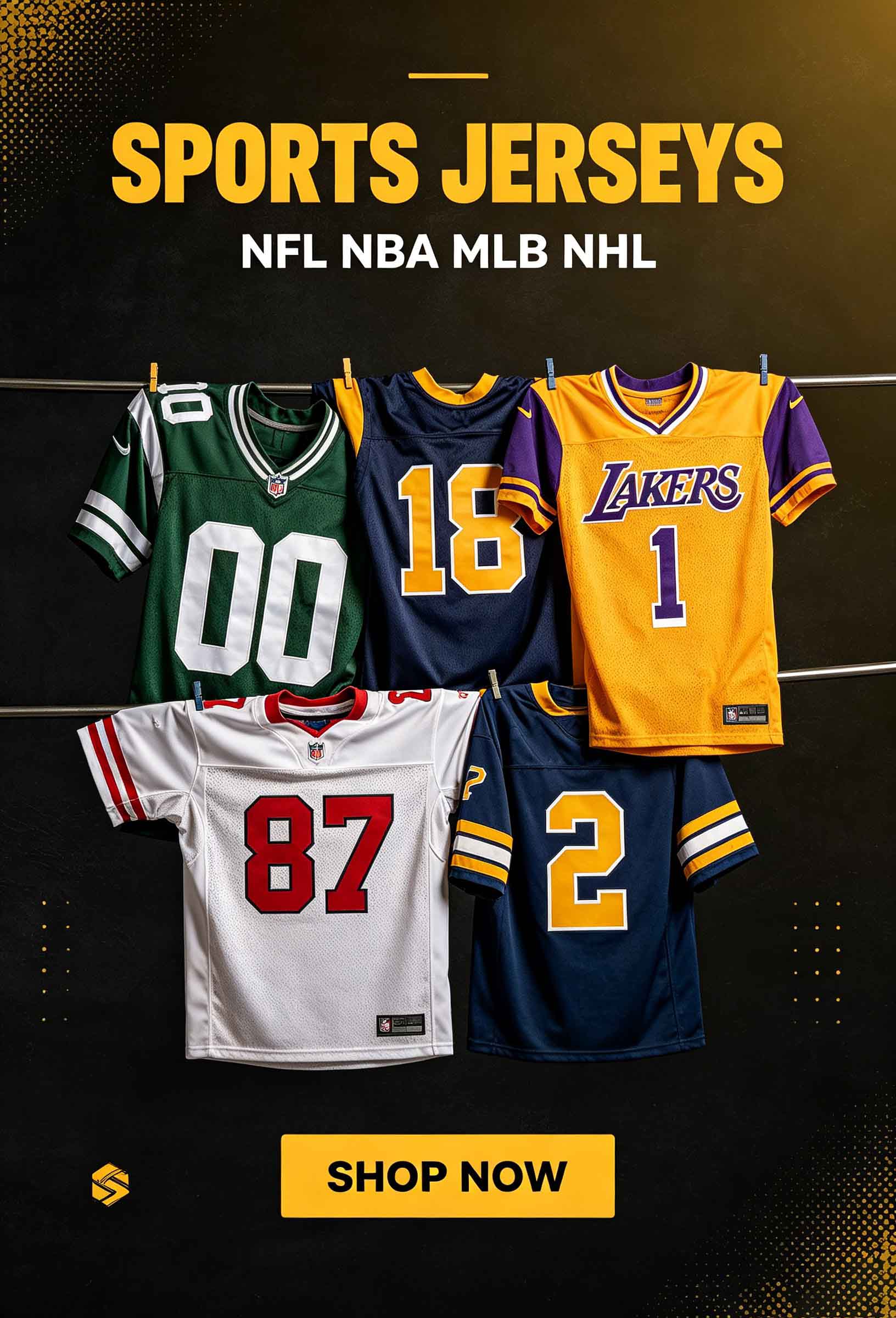
How much do NFL jerseys cost wholesale? For US resellers, league managers, and team apparel buyers, the real answer depends on fabric weight, stitch construction, patch count, customization, and order volume—not just the lowest quote in your inbox. A $14 jersey often hides thin mesh, cracked prints, or overseas freight delays that wipe out margin during playoff season. This guide breaks down realistic bulk price tiers, the construction details that protect your retail profit, and how to source cheap stitched NFL jerseys without gambling on quality.
At normal wholesale volumes, landed US pricing for stitched NFL jerseys usually falls into clear tiers. The numbers below are typical for stock team styles with basic name and number setups; custom patches, odd size runs, and rush production move the price.
- 24–71 units: roughly $24–$38 per jersey
- 72–143 units: roughly $21–$33 per jersey
- 144–287 units: roughly $18–$29 per jersey
- 288+ units: roughly $16–$26 per jersey
The gap between a $16 and a $36 jersey is rarely about the logo. It is about 300 GSM heavyweight mesh, stitch density, collar structure, and whether the supplier is holding real US stock or promising a container that has not cleared customs. Buyers who compare only unit price usually discover the difference after the first customer return.
A serious wholesale jersey must start with 100% breathable polyester mesh that holds shape after repeated wear. Ask for double-stitched Tackle Twill numbers, not heat-pressed vinyl with a stitch line added for appearance. Check for soft interior backing behind the chest crest and numbers so the embroidery does not scratch the wearer. Reinforced collar bands and Z-stitch reinforcement at the shoulder and side seams separate a retail-ready jersey from a disposable one.
Low quotes often hide cost in freight, minimums, or defects. A factory may quote $15 per unit, then add patch fees, name and number charges, air freight, and a 10% defect allowance that pushes the landed cost past a US-stocked supplier. When a shipment misses the pre-season window, resellers are left with inventory that has to be discounted before the first regular-season game.
US-based wholesale programs solve that timing problem. Stock held in US warehouses can ship in days, not weeks, and buyers can reorder popular sizes without committing to a full container. That domestic availability matters most for youth XL, adult 3XL, and team colorways that sell out fast. It also reduces currency and customs exposure on smaller test orders.
When comparing quotes for cheap stitched NFL jerseys, ask for a pre-shipment inspection report with measurements and stitch photos. A reliable supplier will show real production samples, not catalog renders. Confirm whether the quoted price includes names, numbers, patches, and individual poly bags.
Use a simple bulk inspection checklist before you approve a large order:
- Measure chest width and body length against the stated size chart on at least three pieces per size.
- Pull the collar and shoulder seams firmly; look for skipped stitches, loose threads, and puckering.
- Check that Tackle Twill numbers are straight, evenly spaced, and backed with soft lining.
- Confirm mesh weight and stretch recovery; thin mesh feels slick and loses shape quickly.
- Wash one sample in cold water and air dry it to test color bleed, number lift, and seam movement.
Size runs are a common margin killer. A cheap order with too many small and medium jerseys can sit while XL and 2XL sell out. Build your first bulk order around your actual sell-through history, then use the supplier’s size chart and a small fit sample to confirm whether the cut runs true, slim, or long. For team buyers, collect player measurements before locking the final size mix.
Bulk buying works best when you treat the price break as a tool, not a target. If the 144-unit tier saves $3 per jersey but forces you into slow-moving colors, the cash tied up in inventory costs more than the discount. Start with a low MOQ on stocked styles, test two or three colorways, then reorder the winners at the deeper tier. That approach keeps cash moving and protects shelf space.
Custom names and numbers should be quoted separately from stock jerseys. Ask how the supplier handles letter spacing, number height, and patch placement on different sizes. A youth medium and an adult 3XL need different scale and placement, or the jersey looks cheap on the field. Also confirm whether personalization is stitched or printed; printed names on a stitched jersey are a common bait-and-switch.
Plan shipping around the sports calendar. Pre-season, back-to-school, and holiday tournaments create hard deadlines. US warehouse dispatch can cover late reorders, but a factory-direct order needs a buffer for production, inspection, and transit. If you are buying for a league, place the bulk order after sample approval and before registration closes, not after the first game.
Care instructions protect your margin after the sale. Tell buyers to wash stitched jerseys inside out in cold water, skip fabric softener, and air dry. High heat breaks down polyester mesh and soft backing, and it can lift even properly stitched numbers. A one-page care card reduces returns and keeps the jersey looking retail-ready through a full season.
Retail math should drive the source price. If a stitched jersey lands at $22 and retails at $69–$89, the reseller has room for shipping, payment fees, and promotions while keeping a healthy margin. A $14 jersey that generates returns, chargebacks, and dead stock is not cheaper. Distributors should target a landed cost that leaves at least 45–60 points of gross margin after normal markdowns.
Negotiate on landed cost, not the headline unit price. Ask for tier pricing on repeat orders, a clear defect policy, and a written reorder window for core sizes. Confirm whether the supplier can hold stock for scheduled team orders and whether rush production is available during peak months. Those terms matter more than a one-time discount on a small test order.
Cheap Jerseys Wholesale US focuses on the details that keep resellers out of the return cycle: heavyweight mesh, stitched Tackle Twill, reinforced collars, soft backing, and US-based stock movement. The catalog is built for team buyers and distributors who need a low MOQ entry point, tiered bulk discounts, and fast domestic dispatch without sacrificing construction quality.
Q: Is a $15 stitched NFL jersey realistic at wholesale?
A: It can be, but only at larger volumes, on basic styles, or with limited patch work. Check landed cost, stitch quality, and US stock availability before treating the quote as real.
Q: What is the lowest MOQ for bulk NFL jerseys?
A: Stock styles often start around 12–24 units per colorway, while custom names and numbers may start at 24–48 units. Confirm the MOQ before you build a size run.
Q: How can I tell stitched quality from printed quality?
A: Turn the jersey inside out. Stitched Tackle Twill has thread, a backing layer, and clean edges. Printed numbers feel flat or rubbery and often have a glossy surface.
Q: Do US warehouse orders ship faster than factory-direct orders?
A: Yes. US-stocked jerseys usually dispatch in days, while factory-direct production and freight take longer. Use US stock for reorders and event deadlines.
Ready to compare real bulk pricing and protect your margin? Visit www.cheapjerseyswholesaleus.com to view live stock, check tier discounts, and confirm low MOQ availability with US-based dispatch. When you are ready to build a profitable team order, shop the full NFL jersey catalog and lock in wholesale pricing before your next season window closes.