How much do NFL jerseys cost wholesale in the US right now? For buyers committing to real bulk on stitched stock, landed unit cost usually lands between $18 and $46 depending on fabric weight, stitch method, and order size. Most quotes that look too good hide something: tissue-thin mesh, glued numbers that peel after two washes, or a 45-day ocean container that drops your inventory on the dock three weeks after the season ends. Here is what the numbers actually look like, and what to inspect before you wire a deposit.
Start with honest per-unit tiers for stitched NFL jerseys shipped from a US warehouse:
- 12–35 pieces: $38–$46 per unit — test a new team mix or fill a single league order.
- 36–99 pieces: $29–$37 per unit — the working range for most online resellers and pop-up shops.
- 100–299 pieces: $22–$28 per unit — where per-unit profit compounds fast.
- 300+ pieces: $18–$21 per unit — distributor, multi-store, and team-dealer territory.
Anything quoted under $15 with "stitched" in the description should be treated as a red flag until you cut a sample open. At that price, either the numbers are heat-pressed and mislabeled, or the fabric weight has been dropped to something closer to 180 GSM that goes see-through under stadium lights.
Four variables control your landed cost: fabric weight, decoration method, order quantity, and whether the goods are already sitting in a US warehouse or still need to cross an ocean. Two buyers can order the identical jersey and pay $23 or $41 depending on how those four line up. Wholesale pricing is not magic — it is arithmetic, and you should be able to see every line of it.
Fabric is the first thing to verify. Real 300 GSM heavyweight mesh drapes with weight and holds its shape after 40+ wash cycles. The good stock is 100% breathable polyester mesh — the same open-weave construction that moves air on a 95-degree sideline but still blocks enough light to keep the jersey opaque. Ask for the GSM number in writing. If a supplier cannot answer, they are reselling, not manufacturing.
Decoration is where cheap jerseys fall apart. Proper double-stitched Tackle Twill numbers are cut from layered twill, positioned, then run down with dense parallel stitching on all edges. Look for Z-stitch reinforcement at the shoulder seams, armholes, and the number corners — that zig-zag lock is what stops a number from lifting after repeated pulling. This is the standard on the heavyweight stitched NFL jerseys we ship out of US stock, and it is the first thing a serious buyer should check with a thumbnail test.
The details buyers never ask about are the ones that decide your return rate. Soft interior backing sits behind every embroidered number so the thread never scratches a bare chest — that single feature kills most "my kid won't wear it" complaints. Reinforced collar bands with double-row lockstitch keep the neckline from stretching into a wavy mess. Add bar-tacked stress points at the shoulder and hem vents, and you have a jersey that survives a full season of tailgates instead of one.
The US warehouse advantage is real money. Domestic stock means dispatch in 2–4 business days, no customs brokerage, no port congestion, no tariff surprises landing on your invoice after you have already promised a delivery date. When a local team makes a playoff run and demand spikes, you reorder from a US shelf, not a factory queue. That speed is worth more than a few dollars of unit savings on a slow boat.
Low prices hold up when there are fewer hands in the chain. Buying through a direct factory relationship with domestic distribution removes the importer, the regional jobber, and the trade-show middleman, each of whom adds 15–25% without touching the product. That structure is the entire reason cheap jerseys wholesale US pricing can sit at $21 per unit on a 300-piece order while retail still clears at $85–$110.
Minimum order quantity matters more than headline price for new buyers. A supplier that forces 500 pieces at a great rate is useless if you only have $6,000 of working capital. Look for low or mixed-MOQ programs where you can combine teams, sizes, and even youth runs into one tier break. Cash flow kills more small resellers than margin does.
Build a size curve before you order, not after. Across most reseller accounts, the split runs roughly M 20%, L 28%, XL 22%, 2XL 14%, S 10%, 3XL+ 6%. Adjust upward on XL and 2XL for football specifically — NFL buyers skew heavier than basketball or baseball customers. Keep a printed size chart on hand; fit questions are the number one reason a customer hesitates at checkout.
Set a written inspection standard and hold suppliers to it. A workable AQL for jersey bulk is:
- Pull 10% of cartons on any order over 100 pieces, minimum 12 units.
- Check stitch density — at least 8–10 stitches per inch on number edges.
- Verify number centering within 3 mm on the vertical axis.
- Color-match against a retained sample under daylight, not warehouse fluorescents.
- Confirm tag, size label, and hangtag all agree with the packing list.
Decide upfront whether you are selling stitched or printed. Stitched moves at $85–$110 retail and carries a 55–65% gross margin; printed moves at $35–$55 with a similar percentage but a much lower ticket. Most profitable accounts run both: stitched as the hero product, printed as the volume and impulse-buy item for youth and budget shoppers.
Know the obvious tells so you can audit your own supply. Glued numbers have a plastic sheen and a hard edge that lifts at the corner. Genuine Tackle Twill has visible thread channels and a slight thickness you can feel with a fingernail. Off-center jock tags, mismatched team fonts, and loose threads at the armhole are the three fastest signs of a rushed production line.
Run the margin math before you commit. A $24 unit sold at $89 nets $65 — a 73% markup. A $19 unit sold at $79 nets $60. The cheaper jersey is not automatically the better deal if it costs you returns, chargebacks, and a damaged reputation. What matters is net profit per unit after returns and shipping, and that number favors quality every time once your volume stabilizes.
Buy on the calendar, not on impulse. Stock builds for back-to-school in July, peaks again before the playoffs in December and January, and spikes around the draft and holidays. Placing a 200-piece order in late November from overseas guarantees you miss the window. Domestic stock lets you order reactively in 2-week increments and chase whatever team is hot that month.
Care instructions protect your resale value and cut complaints. Wash stitched jerseys inside out in cold water on a gentle cycle, skip the dryer entirely, and hang dry flat. Never iron directly over embroidery — use a pressing cloth on low, or steam from the reverse side. That routine is what keeps numbers from cracking and stops twill from curling at the corners after a dozen washes.
Youth and team accounts are the most under-served segment. Youth sizing runs YS–YXL and sells in multi-piece orders to parents, schools, and rec leagues rather than one-offs. If you can supply a full roster with consistent numbering and a 7–10 day turnaround on names and numbers, you lock in repeat business every single season instead of fighting for one-time retail sales.
Plan restocks around sell-through, not gut feel. Any SKU that moves 60% of its units in 30 days should be reordered immediately at the next tier break. SKUs sitting under 20% after 45 days should be bundled into clearance packs rather than held — dead inventory on a shelf is the same as a loss, just slower.
Q: Is $18 per stitched NFL jersey realistic?
A: Yes, at 300+ pieces on domestic stock with basic team designs. Custom names and numbers, specialty fonts, or limited throwback runs will push unit cost up $4–$9.
Q: How fast do US warehouse orders ship?
A: Stock items typically leave the warehouse in 2–4 business days. Custom-decorated orders add 5–8 business days depending on quantity.
Q: Do you require a minimum order?
A: Entry-level programs start low so new resellers can test the market. Better tier pricing kicks in at 36, 100, and 300 units, and you can mix teams and sizes to reach a break.
Q: Can I combine NFL, MLB, NBA, and NHL jerseys in one order?
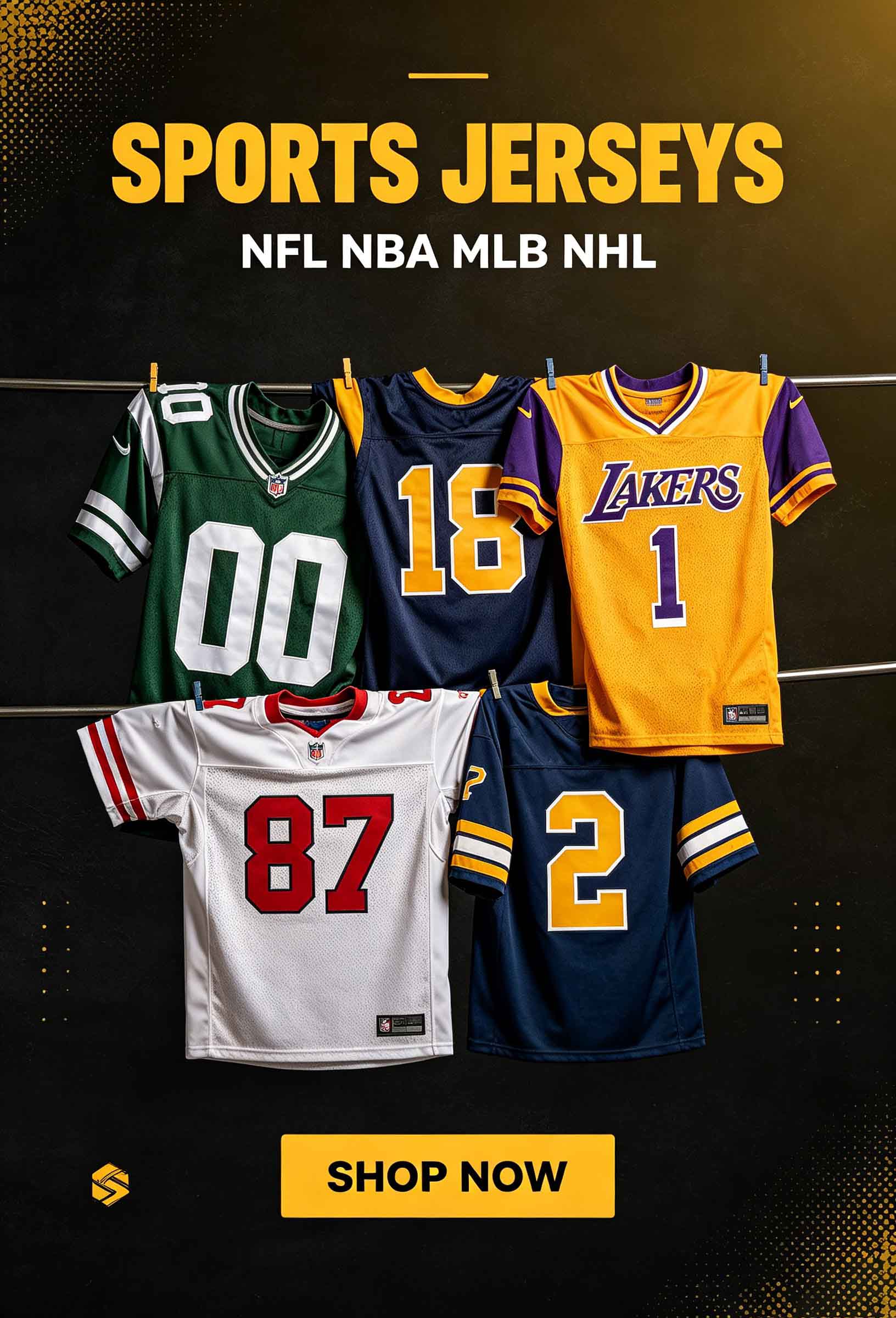
A: Yes. Mixed sport orders are common for general sports retailers, and combining them is the easiest way to hit the next quantity discount without overloading one category.
Stop guessing at unit cost and start buying where the math works. Browse the full NFL wholesale catalog at www.cheapjerseyswholesaleus.com to see live stock, low MOQ entry points, tiered bulk discounts, and US-based dispatch that gets your inventory on the shelf before the season, not after it. Check current pricing today and lock your tier before the next restock cycle moves.