Knowing how to spot a fake NFL jersey takes about ninety seconds once you know where to look, and for wholesale buyers it decides whether a season ends in profit or in a warehouse full of returns. At Cheap Jerseys Wholesale US we run every bulk lot through the same inspection checklist below, because a $12 jersey that falls apart in a customer's hands costs you a $200 repeat account. High-volume resellers, league managers and team apparel buyers do not need lab equipment. They need to know which five or six details separate a factory-direct stitched jersey from a counterfeit that was never built to survive a season.
Most fakes fail at the seams, not at the logo. Counterfeiters can print a crest accurately. What they cannot do cheaply is stitch a layered twill number, back it with soft interfacing, and reinforce every stress point. That is exactly where your money is made or lost when you buy in bulk.
Start with fabric weight, because it is the fastest filter you have. Legitimate stitched jerseys use 100% breathable polyester mesh in the 280-320 GSM range for pro-grade builds, with a slightly lighter 220-260 GSM on youth sizes. Cheap counterfeit mesh usually lands between 150 and 180 GSM and feels like a disposable grocery bag when you hold it against a light source.
Here is the quick field test. Hold the jersey up to a window or a ceiling light. Quality mesh has a tight, evenly punched diamond or hex pattern with consistent hole size across the whole panel. Fakes show uneven holes, thin spots near the shoulder yoke, and a slightly shiny surface from recycled polyester blends.
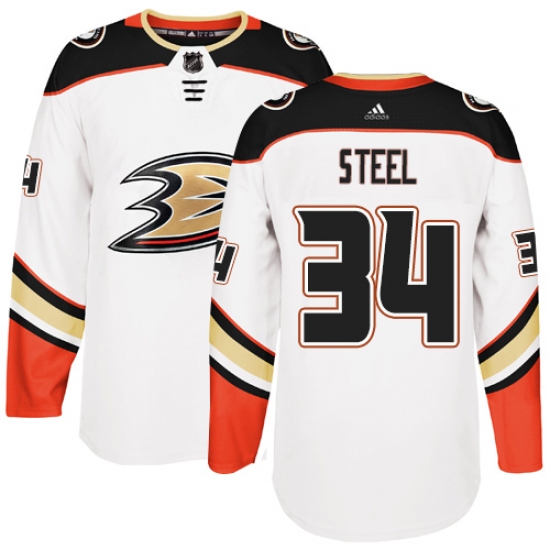
Numbers are the second giveaway. A real game or replica jersey uses double-stitched Tackle Twill numbers — a base layer plus a top layer, cut with clean edges and sewn down with two separate stitch runs. Run your fingernail under the edge of a number. If you can lift it, if you see a plastic film, or if the edge feels sealed rather than cut, it is heat-pressed, not stitched.
Heat-pressed and screen-printed numbers tell on themselves after five or six washes. They crack along the fold lines, peel at the corners, and leave a ghost outline on the fabric. For resellers, that is a customer service problem you inherit whether you caused it or not.
- Stitched/Tackle Twill: survives 50+ wash cycles, holds resale value, commands premium pricing.
- Heat-pressed: cracks in 5-10 washes, triggers returns, kills repeat business.
- Screen-printed: acceptable only on youth practice jerseys sold as entry-level stock.
Flip the jersey inside out next. This is the step most buyers skip and the one that separates real supply from garbage. A properly built jersey has soft interior backing behind every stitched number and letter — a lightweight mesh or tricot layer that keeps the embroidery threads from scratching skin.
Fake jerseys leave the back of the stitching exposed. You will feel stiff thread knots, loose tails of polyester, and occasionally a raw glue patch. Have a staff member wear a sample for twenty minutes against bare skin. If they want it off, do not buy the lot.
Check the collar and shoulder construction. Quality jerseys use reinforced collar bands with a ribbed knit that snaps back into shape after stretching. A counterfeit collar goes slack after two or three wears and starts to wavy-edge. Pull the collar wide and release it. It should recover to its original shape within a second or two.
Stitch density matters more than buyers realize. Count the stitches in one inch of seam on the shoulder, sleeve hem and side panel. Quality manufacturing runs 8 to 10 stitches per inch with consistent tension. Under 6 per inch means the seam will blow out at the first hard tug during a game.
Sleeve stripes and shoulder seams should mirror each other perfectly. Lay the jersey flat on a table, fold it exactly in half, and check whether the stripes meet. Counterfeit production lines cut panels in bulk from misaligned pattern stacks, so the left and right sides are often 3 to 5 mm off.
Lettering proportions are another easy tell. Numbers on real jerseys are cut to a specific ratio — front numbers slightly smaller than back numbers, nameplate lettering even in height and spacing. Fakes often have oversized names, inconsistent letter spacing, and a nameplate sewn at a visible angle.
Do a color bleed test before committing to a bulk order. Take one sample, submerge it in warm water with a small amount of mild detergent for ten minutes, then press it against a white cotton towel. Quality dye holds. Cheap dye transfers immediately, and that means your customers will be returning pink-stained whites.
For large-volume buyers, set up an AQL-style inspection routine. Pull three cartons from every twenty received, and from each carton pull five jerseys across the size run. Check mesh weight, interior backing, collar recovery and stitch density on all fifteen. If more than one jersey fails, reject the carton batch and request replacement before it reaches your shelves.
This is where sourcing from a US-based operation changes the math. When you order stitched NFL jerseys from domestic stock, you avoid six-week ocean freight windows, customs holds and the "sold out before the playoffs" problem. Reorders ship from US warehouses in 24 to 72 hours, which means you can restock hot sellers mid-season instead of guessing three months ahead.
Run the margin numbers before you buy anything. A mid-tier retail jersey sells for $85 to $130. Bulk wholesale pricing on quality stitched stock typically lands between $16 and $28 per unit depending on tier and volume. Even after shipping and returns, that is a 3x to 5x markup with real room for promotional pricing during rivalry weekends and playoff pushes.
Know your size curve before you commit. US buyers order roughly 45% L and XL combined, 25% M, 15% 2XL, and the remainder split between S, 3XL and 4XL. Ordering flat across sizes leaves you with dead 3XL inventory and empty L shelves by week three.
Teach your customers basic care and your return rate drops fast. Wash stitched jerseys inside out in cold water on a gentle cycle, skip fabric softener, and air dry or tumble on low. Heat is what cracks printed numbers and shrinks mesh panels. A one-line care card tucked into every shipment pays for itself.
Customization is worth building into your first order if you serve league or team accounts. Names, numbers, sleeve patches and custom nameplates are all available at low minimums, and custom stock carries a higher margin than generic retail because there is no direct price comparison.
- 300 GSM heavyweight mesh: pro-grade feel, best for adult retail stock.
- Double-stitched Tackle Twill: non-negotiable on adult jerseys.
- Soft interior backing: reduces returns and complaints.
- Z-stitch reinforced seams: required on side panels and shoulder yokes.
- Reinforced collar bands: check recovery on every inspection batch.
FAQ
How much do stitched NFL jerseys cost wholesale in the US?
Pricing depends on volume, size mix and customization. Typical bulk tiers start around $16 to $20 per unit for standard stock and scale down as order quantity increases. Custom names and numbers add a modest per-unit charge with low minimums.
How many jerseys should a first-time reseller order?
Start with 50 to 100 units weighted toward L and XL, plus a small run of 2XL. That is enough to test sell-through without tying up capital, and US-based restocking means you can refill within a few days.
Can I mix NFL teams and sizes in one wholesale order?
Yes. Mixed-team, mixed-size orders are standard for resellers and league buyers. Build the size curve first, then spread teams based on your local market demand.
How do I keep jersey numbers from cracking?
Buy stitched Tackle Twill instead of printed, then wash cold, inside out, and never use high dryer heat. Stitched numbers do not crack — they only fray if the stitching is low density, which is why stitch count is part of every quality inspection.
If your current supplier cannot answer a stitch-density question, you already know what you are buying. Head to Cheap Jerseys Wholesale US to see the full in-stock catalog, tiered bulk discounts, low MOQ entry points and US domestic shipping that gets orders out the door in 24 to 72 hours. Compare one sample against your current stock and the margin difference will make the decision for you.